22 Aug 2026
Coordinating Probability Frameworks Across Table Games, Reel Mechanics, and Event Wagering

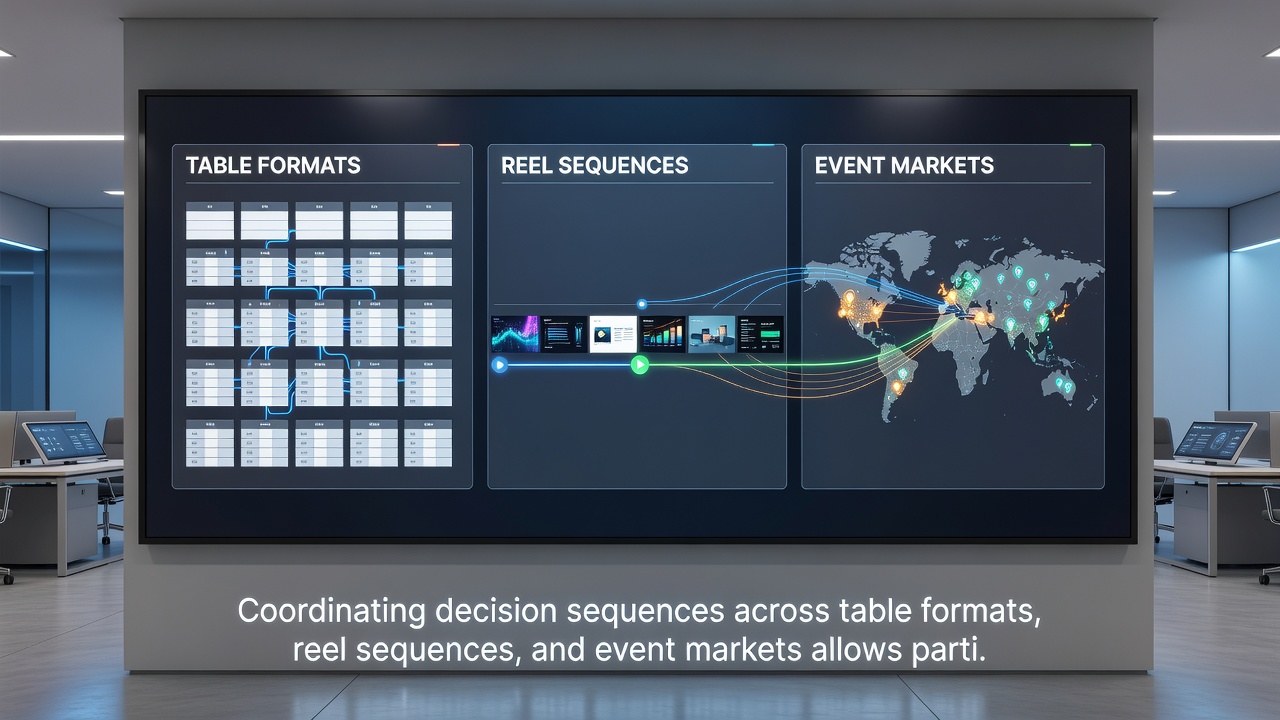
Coordinating decision sequences across table formats, reel sequences, and event markets allows participants to apply shared probability assessments in structured ways, and this approach draws on consistent mathematical principles that apply regardless of format. Observers note that expected value calculations, variance measurements, and conditional probability updates can transfer directly from one environment to another when participants maintain a unified framework rather than treating each format in isolation.
Table games such as blackjack and roulette rely on fixed probabilities that remain constant across rounds, while reel sequences in slot machines introduce independent outcomes with programmed return-to-player percentages. Event markets in sports wagering add layers of variable odds influenced by external factors like team performance data and market movement. Those who study these formats find that mapping decision points onto a single probability grid reduces duplication of effort and highlights overlaps in risk exposure.
Shared Assessment Tools in Practice
Researchers at institutions including the University of Nevada, Las Vegas have documented how participants construct probability trees that encompass multiple game types simultaneously. One documented method involves assigning base rates to each format, then updating those rates with new information such as card counts in table games or statistical models in sports events. This process creates a running ledger of expected outcomes that participants reference before each sequence of choices.
Data from industry reports compiled by the American Gaming Association indicate that operators in regulated markets have observed increased use of digital tools that track cross-format probabilities. These tools allow real-time comparison of house edges across table minimums, reel volatility settings, and live event spreads. Starting in August 2026, several North American jurisdictions plan to require enhanced disclosure of probability parameters on digital interfaces, which aligns with existing practices already in place in parts of Australia and Canada.
Sequence Coordination Examples
Consider a participant who begins with a table game sequence, moves to reel play, then places an event market wager. The initial table decision might involve choosing a bet size based on remaining deck composition, while the reel sequence requires evaluating hit frequency against the same bankroll threshold. The event wager then incorporates updated odds that reflect the same overall risk tolerance previously applied. Studies show this chained approach maintains consistency because each step references the same probability distribution rather than resetting assessment criteria.
Another pattern appears when participants group decisions by volatility level instead of game category. Low-volatility table bets can offset higher-variance reel sequences, while event markets with shorter timeframes provide intermediate adjustments. Those who track these sequences report that the method produces measurable alignment between intended and realized outcomes across sessions, according to aggregated data from multiple operator platforms.
Regulatory and Technical Developments
Regulatory bodies outside the UK, including the Nevada Gaming Control Board and state commissions in New Jersey, have examined how cross-format probability tools affect responsible gambling measures. Technical standards emerging in 2026 emphasize interoperability between game servers so that probability data can flow between table, reel, and event systems without manual re-entry. This development reduces errors in probability updates and supports the structured application described in academic analyses.
Industry organizations such as the Canadian Gaming Association have published guidelines that encourage operators to present probability information in comparable formats across game types. Participants who adopt these standardized presentations gain clearer visibility into how one decision influences subsequent options, particularly when moving between live table environments and digital reel or event platforms.
Conclusion
Coordinating decision sequences across these formats ultimately rests on maintaining a single set of probability references that update continuously. Evidence from regulatory disclosures and academic studies demonstrates that this coordination produces consistent application of assessments without requiring separate mental models for each game category. As technical standards evolve through August 2026 and beyond, the infrastructure supporting such unified approaches continues to expand across multiple jurisdictions.