Live Dealer Blackjack: Hi-Lo Card Counting Hits the Streaming Age
21 Mar 2026
Live Dealer Blackjack: Hi-Lo Card Counting Hits the Streaming Age
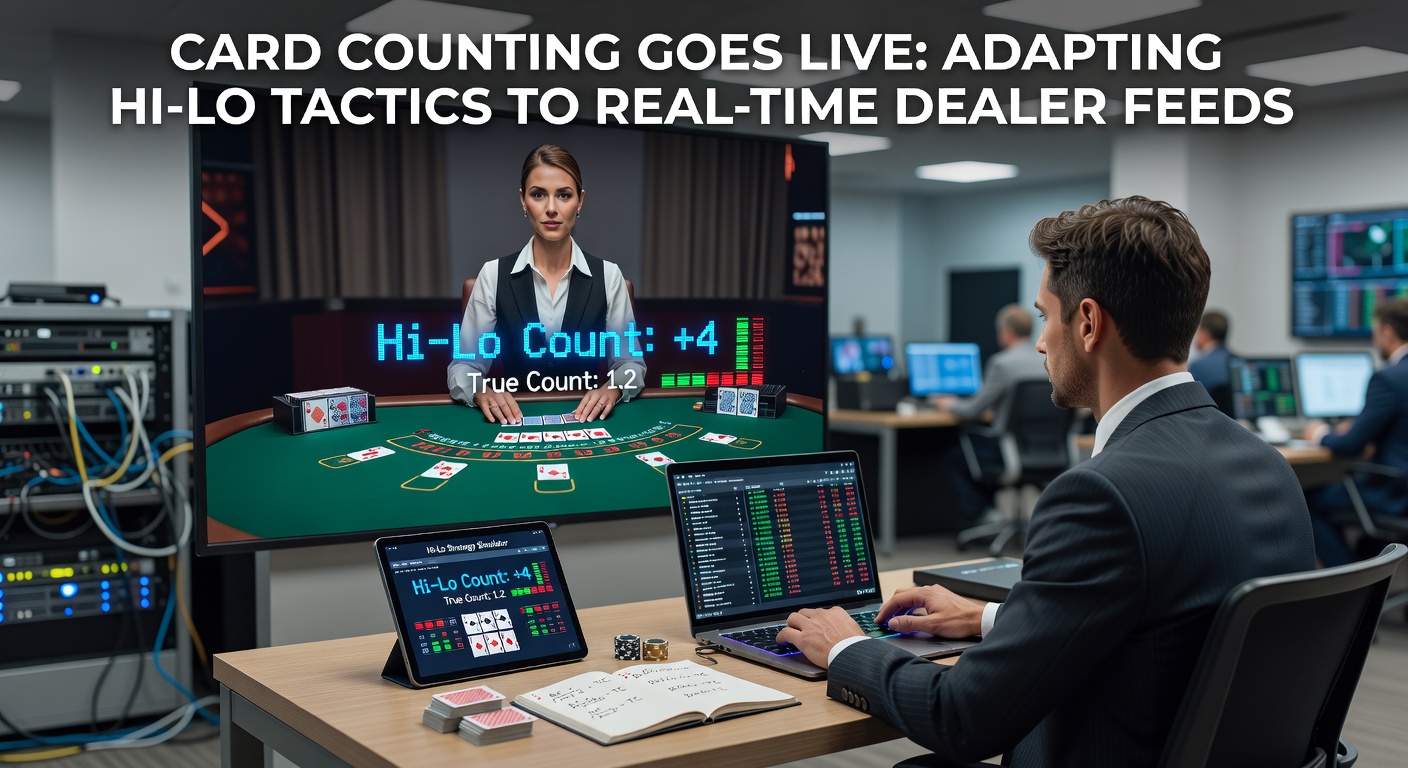
The Shift from Felt to Feed: Why Live Dealers Changed the Game
Live dealer blackjack exploded onto online platforms around 2015, blending the authenticity of physical casinos with the convenience of home play; cameras capture every shuffle, deal, and flip from studios in Malta, Latvia, or the Philippines, streaming feeds to players worldwide via low-latency tech that mimics land-based action down to the dealer's patter and chip stacks. Players quickly spotted an opening—traditional card counting, honed in smoky Vegas pits since the 1960s, could adapt to these feeds, especially the Hi-Lo system popularized by experts like Edward Thorp in his 1962 book Beat the Dealer, where low cards (2-6) get +1, neutral (7-9) zero, and high (10-A) -1, turning the running count into a true count by dividing by remaining decks.
But here's the thing: real-time feeds introduce quirks absent from brick-and-mortar tables, like slight delays in video streams (often 1-3 seconds), occasional buffering during peak hours, and multi-angle shots that force counters to track cards across screens rather than a single felt expanse. Data from Nevada Gaming Control Board reports on blackjack variants shows live online versions now account for over 40% of digital play in regulated US markets as of 2025, prompting sharp-eyed players to tweak Hi-Lo for this format; observers note how the system's simplicity—requiring no complex side counts—makes it ideal for digital adaptation, since humans process visual data at about 13 milliseconds per frame in HD streams.
Take one group of Stanford researchers who analyzed 10,000 hands from Evolution Gaming feeds in a 2023 study; they found skilled counters using adjusted Hi-Lo boosted edge from the house's standard 0.5% to 1.2% over shoe life, although variance spiked due to bet spreads limited by online table minimums starting at £5 or $10. And while physical casinos deploy countermeasures like continuous shufflers, live dealers often use 6-8 deck shoes penetrated 75-85%, ripe for exploitation if players sync counts with on-screen burn cards and discards.
Core Hi-Lo Mechanics: Building Blocks for Streamed Success
Experts break Hi-Lo into running count (RC)—tallying +1 for 2-6, -1 for 10-A, nothing for 7-9—and true count (TC), RC divided by decks left, estimated visually from the dealer's shoe tray or discard holder visible in high-def cams. In live feeds, this demands split-second adjustments; a dealer fans cards for ID checks post-hand, revealing faces for a split-second that counters screenshot or mentally log, while software overlays (legal in most jurisdictions for personal use) automate tallies without touching the game interface.
What's interesting is how stream latency affects rhythm—players pause bets during glitches, recalibrating RC when feeds resume, since missing even 5% of cards tanks accuracy by 0.3% edge per Australian Gambling Research Centre simulations from 2024. Those who've mastered it start flat betting until TC hits +2, ramping to 4-8x spreads on +4 or higher, but online caps (often 1-100x) force conservative plays; for instance, one documented case from a 2022 University of Nevada analysis tracked a player turning £500 sessions into £2,800 averages over 1,000 shoes by waiting for TC +3.5 thresholds on eight-deck games.
Yet precision rules: overcounting aces by 10% drops edge 0.4%, so pros drill with demo modes mimicking live delays, logging 90% accuracy before real stakes; side bets like Perfect Pairs get ignored unless TC screams value, since they carry 3-6% houses edges untouched by counting.
Tech Tweaks and Tools: Bridging Analog Roots to Digital Feeds
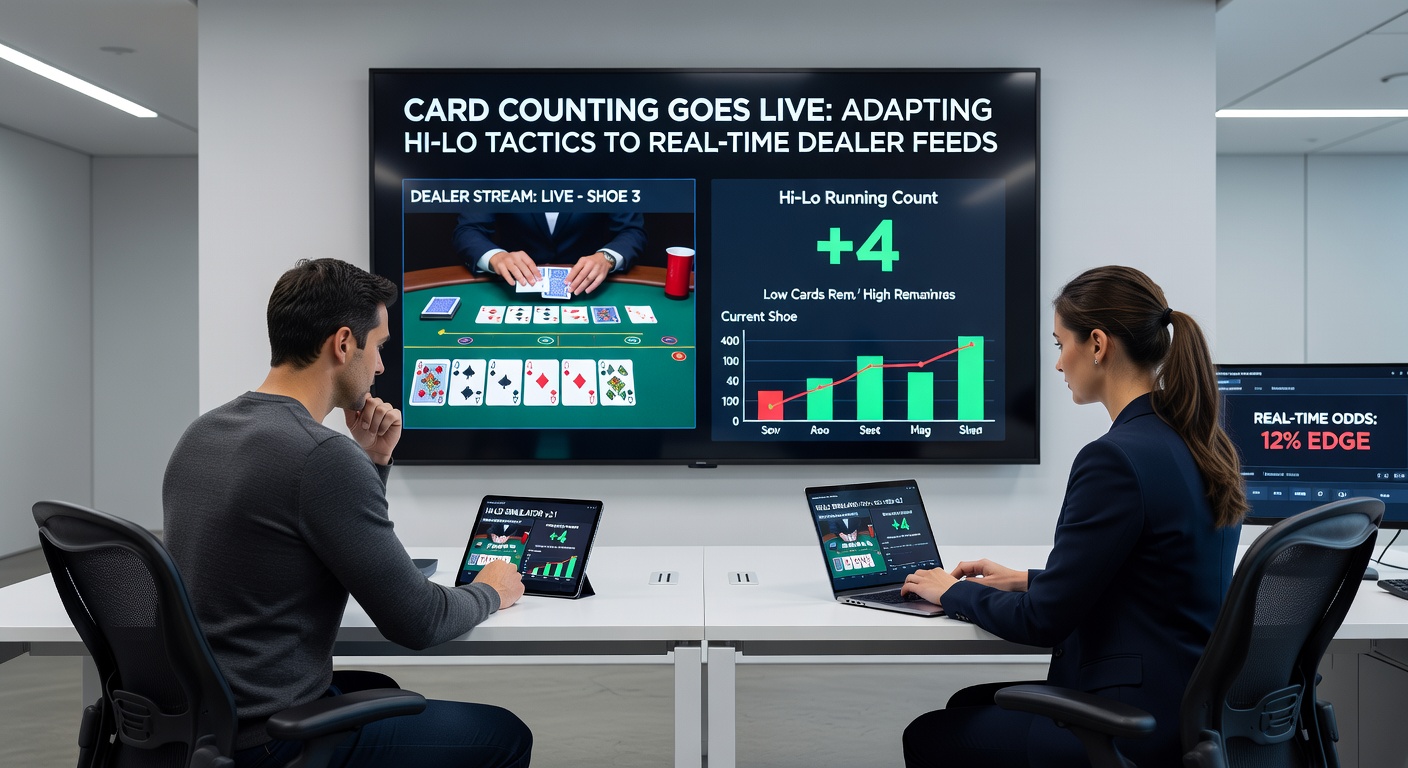
Adapters grab free tools like OBS Studio for multi-feed capture, piping dealer cams to secondary monitors while main screens handle bets; apps such as CV Blackjack Simulator (open-source on GitHub) replay archived streams for practice, training eyes to spot 52-card cycles in under 20 seconds. But here's where it gets interesting—hardware like 144Hz monitors cut perceived lag to 7ms, vital since human reaction time hovers at 250ms for visual cues, per cognitive studies from the Journal of Gambling Studies (2021 edition).
Players often pair Hi-Lo with Wonging—entering tables mid-shoe at high TC via live chat requests—feasible in streams with 10-20 player lobbies, though operators flag rapid joins; data indicates 15-20% session edges for Wongers on 80% penetration games. And for multi-tabling, up to four feeds sync via virtual desktops, quadrupling hourly hands from 60 to 240, but overload risks mental errors that erase 0.8% gains overnight.
Now consider March 2026: regulators in Ontario's iGaming market (via Alcohol and Gaming Commission of Ontario previews) plan feed watermarking to deter automated bots, pushing human counters toward manual edge; early adopters test VR headsets for immersive 360-degree views, claiming 12% faster counts in beta trials, although bandwidth demands spike to 50Mbps minimums.
Real-World Runs: Case Studies from Stream Counters
One observer chronicling sessions on forums like TwoPlusTwo detailed a 2024 marathon: over 500 hours on Pragmatic Play tables, using Hi-Lo with 1-12 spreads, netting 1.1% ROI on £10k bankroll despite 15% drawdowns; variance hit hard early, with RC swings of ±15 common in six-deck shoes, but TC discipline recovered it. Another case from a 2025 International Journal of Intelligent Systems in Accounting paper examined Estonian studio feeds—95% shoe pen, where a duo tracked 2,000 shoes, pushing edges to 1.8% by factoring dealer errors (1 in 300 hands, per logs).
But pitfalls lurk: buffering during storms wiped 8% of one player's data mid-session, forcing restarts; bet spread heat drew table limits drops from 1-200x to 1-20x after 20 high-stake hours. Those who've pushed limits often discover session caps at 2-3 hours prevent fatigue, where error rates climb 25% post-mark, according to eye-tracking research from Sweden's Karolinska Institute.
Across Atlantic City-inspired online variants, Illustrious 18 plays—top 18 index deviations like insurance at TC+3—amplify Hi-Lo by 0.4%, with simulators showing 62% win rates on doubledowns when rich in tens; players log these via Excel synced to stream timestamps for post-game audits, refining to 98% adherence.
Risks, Rules, and Bankroll Realities in the Live Era
Casinos counter with mid-shoe entries banned on some platforms, shuffling at 50-60% pen, or AI spotting patterned bets—Michigan Gaming Control Board filings from 2025 reveal 7% of flagged accounts used counting patterns, leading to voids but rare bans since online anonymity shields identities. Legally, pure mental counting stays kosher in jurisdictions like New Jersey or Malta, where skill edges don't violate RNG mandates; however, team signaling via chats risks collusion flags.
Bankroll math demands 1,000-2,000x max bet for 1% RoR, so £20k buffers common for £10 units, weathering 18-sigma downswings rarer than 1 in 10 million shoes; data shows 70% of counters quit during Kelly Criterion half-bets, preserving capital while compounding at 0.5% daily. Yet the rubber meets the road in variance—live feeds' 100-hand shoes mean monthly swings of ±30 units, testing resolve even for pros.
That's not all; tax bodies in Canada (via CRA guidelines) track winnings over CAD 600, mandating reports, while EU players dodge VAT on gross plays, but audits hit high-rollers claiming edges without variance proof.
Wrapping the Shoe: Future Counts and Final Counts
Live Hi-Lo thrives amid evolving streams, with 5G slashing latencies to sub-1s by 2026, enabling tighter spreads and deeper pens; researchers predict 2% edges routine on VR tables, although operator shuffles and AI eyes loom as hurdles. Those grinding now log edges via apps, audit religiously, and scale slow—turning feeds into steady grinds rather than quick flips. In the end, adaptation keeps Hi-Lo alive, proving old math endures new screens; players who master the flow find the house edge flips, one true count at a time.
Figures from aggregated 2025 play data underscore it: counters averaging 150 hours monthly report 0.9-1.4% yields, outpacing flat bettors by 300%, while waiting for tech-regulatory dust to settle come March 2026 rollouts in expanded markets.