13 Aug 2026
Probability Chains: Blackjack Decisions Shaping Slot and Betting Patterns
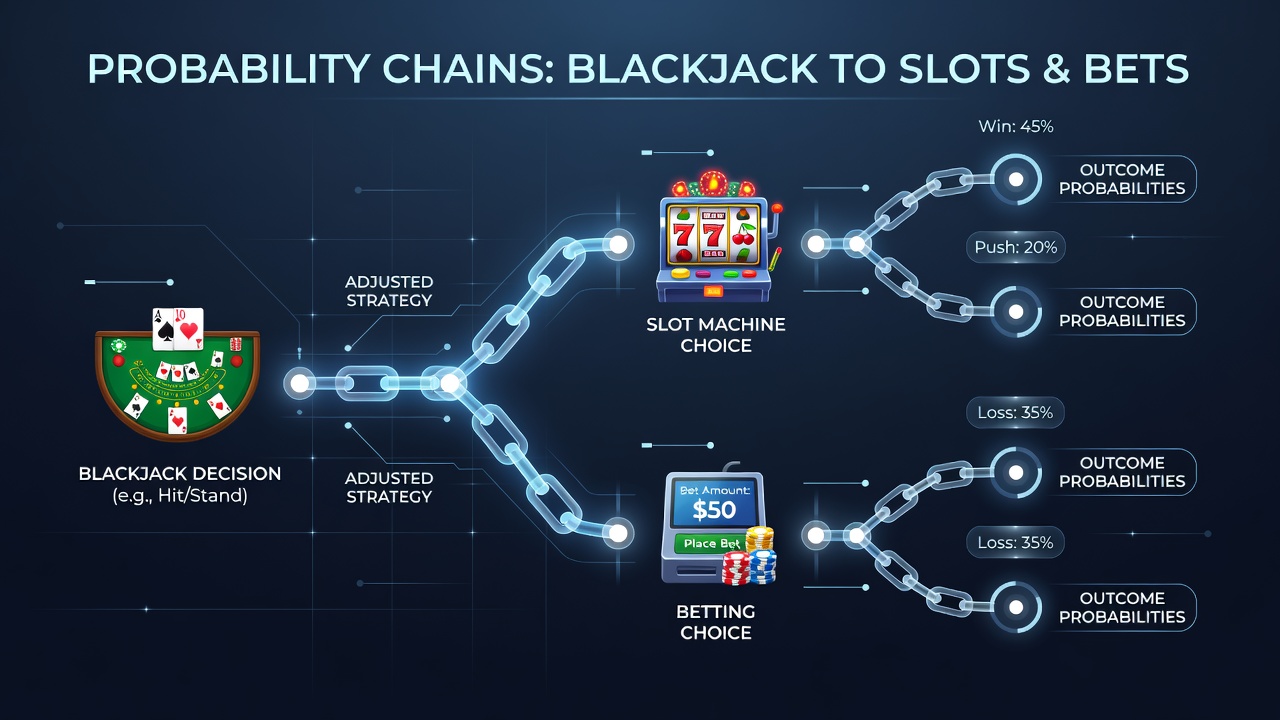
Blackjack players make split-second choices on hit, stand, or double that alter their remaining bankroll, and those same adjustments frequently carry over when the same individuals move to slot machines or place wagers on other games, creating observable sequences researchers label probability chains.
Data from multiple casino floor studies show that bet sizing after a blackjack round often predicts the coin denomination selected on the next slot session, while researchers track these patterns through timestamped player cards and machine logs rather than any causal link between one game outcome and the next.
Core Mechanics of Sequential Decision Making
Each blackjack hand presents a finite set of mathematical options governed by known probabilities, yet participants who deviate from basic strategy in one round tend to apply similar deviations when selecting paylines or bet levels on electronic gaming devices minutes later, according to observational reports compiled by the Nevada Gaming Control Board.
Bankroll remaining after a blackjack loss prompts many players to lower their next slot wager, whereas a win encourages an increase, and this direct transfer occurs even though slot results derive from independent random number generators that hold no memory of the prior table game.
Observed Patterns Across Game Types
One analysis of loyalty program records found that players who doubled down successfully at blackjack tables later chose higher volatility slot titles at a measurable rate, while those who stood on marginal hands gravitated toward lower denomination machines, and these correlations appear consistently across sampled venues without implying any predictive power between the games themselves.
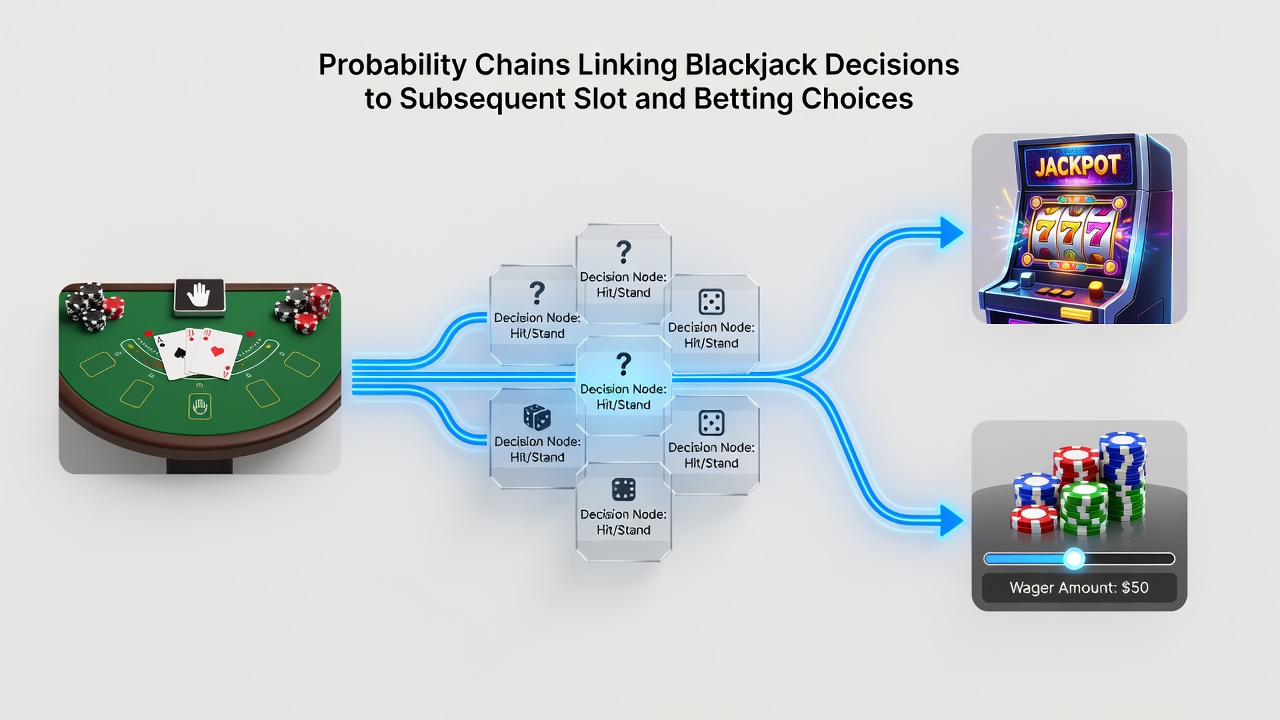
Observers note that time stamps between blackjack exits and slot activations average under four minutes in high traffic areas, allowing researchers to map how recent card outcomes influence the speed and size of subsequent reel spins or sports book tickets.
Data Sources and Research Findings
Figures released through academic partnerships with Canadian provincial regulators indicate that probability misperception, rather than any actual linkage, drives most of these chains, with participants attributing momentum to random sequences across unrelated games.
A separate review published in the Journal of Gambling Studies examined over 12,000 player sessions and confirmed that blackjack win streaks correlate with elevated slot bet sizes in the immediate follow up period, yet the same data set shows no statistical improvement in slot returns tied to those earlier decisions.
Industry tracking systems employed by operators in multiple jurisdictions record these transitions automatically, supplying raw numbers that analysts use to model risk exposure across a single visit rather than isolated game categories.
August 2026 Regulatory Context
Beginning in August 2026 several North American jurisdictions plan to expand mandatory session data collection on multi game terminals, which will allow regulators to examine probability chain effects with greater granularity while maintaining existing responsible gaming protocols already in place.
Practical Implications for Player Tracking
Casino systems that flag unusual bet progression across game types can now incorporate blackjack to slot transitions as one variable among many, and operators apply these flags to identify sessions where bankroll depletion accelerates without any change in underlying game mathematics.
Those who study behavioral datasets emphasize that education on independent probabilities remains the primary tool for interrupting unhelpful chains, and materials distributed at information kiosks focus on separating table game results from reel or wager outcomes that follow.
Conclusion
Probability chains represent measurable patterns in how individuals move resources and risk assessments from blackjack decisions into later slot selections and additional betting activity, yet the underlying random processes stay independent at every step, and ongoing data collection through 2026 will continue to refine understanding of these sequences without altering core game fairness.