27 Jun 2026
Resource Allocation Models Merging Table Game Tactics, Reel Dynamics, and Prediction Event Markets
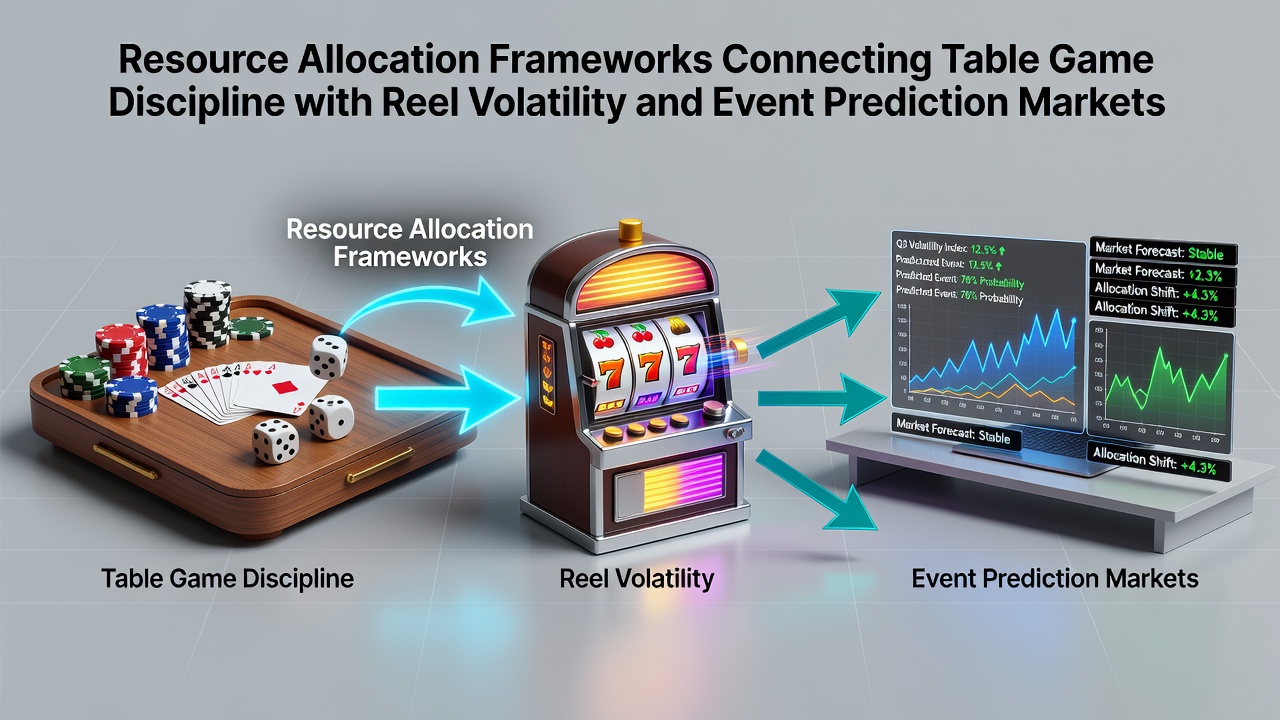
Resource allocation frameworks have emerged as structured approaches that link disciplined bankroll practices from table games to the inherent swings found in reel-based machines, while incorporating forecasting elements drawn from event prediction markets. These models treat capital as a finite resource that moves across different risk profiles, allowing operators and participants to adjust exposure based on observed patterns in each category. Data from the American Gaming Association shows that integrated systems often track session-level metrics to redistribute stakes in real time rather than relying on static divisions.
Core Elements of Table Game Discipline
Table game strategies typically center on predefined loss thresholds, bet sizing rules, and session duration limits that reduce variance over repeated plays. Blackjack and poker variants demonstrate how players apply stop-loss mechanisms and unit-based progression systems to maintain control during extended sessions. Observers note that these methods produce measurable outcomes when participants adhere to documented parameters, with studies from the University of Nevada, Reno indicating lower drawdown rates among those who document every decision point. Such discipline creates baseline data that frameworks later adapt for higher-volatility environments.
Understanding Reel Volatility Patterns
Reel-based games operate on mathematical return-to-player percentages combined with hit frequency and bonus trigger rates that generate distinct volatility signatures. High-volatility titles deliver infrequent but larger payouts, whereas medium-volatility options maintain steadier return curves across shorter time spans. Allocation models map these signatures against table game data to determine how much capital should shift toward reels during periods when table results remain within expected ranges. Research indicates that volatility indexing helps identify optimal entry points for reel sessions without disrupting overall portfolio balance.
Event Prediction Markets and Forecasting Layers
Prediction markets aggregate participant wagers on discrete outcomes such as election results, sports fixtures, or economic indicators, producing probability estimates that evolve with incoming information. These platforms differ from traditional fixed-odds betting because prices adjust continuously and reflect collective sentiment in real time. Frameworks incorporate market-derived probabilities as dynamic inputs that recalibrate reel and table allocations when external events create temporary pricing inefficiencies. One analysis released by the Australian Gambling Research Centre found that prediction market data improved capital deployment timing when cross-referenced with historical slot performance metrics.

Integration Mechanisms Within Allocation Frameworks
Effective models employ layered decision trees that first evaluate table game performance against preset benchmarks, then assess current reel volatility indices, and finally consult live prediction market spreads before executing transfers. Software platforms record these steps in centralized ledgers that participants review at set intervals. When table results exceed variance thresholds, capital automatically routes toward lower-volatility reels or hedged prediction contracts to offset exposure. Conversely, favorable prediction market pricing can trigger increased reel allocations during identified hot cycles. Such automation reduces manual intervention while preserving audit trails required by regulatory standards.
Operational Adjustments Around June 2026
Regulatory updates scheduled for June 2026 in multiple jurisdictions will require enhanced reporting on cross-product capital flows, prompting operators to refine existing frameworks with additional compliance checkpoints. These changes emphasize transparent documentation of how prediction market data influences reel and table allocations. Systems already in development incorporate automated alerts that flag deviations exceeding predefined tolerance bands, ensuring alignment with forthcoming disclosure rules. Participants who maintain detailed logs of allocation decisions stand to meet these standards without major procedural overhauls.
Practical Implementation Examples
One documented case involved a mid-sized operator that synchronized poker room data with slot floor analytics and external prediction feeds covering major sporting events. The resulting model redistributed daily bankrolls every four hours based on volatility readings and market probabilities, yielding consistent utilization rates across all three segments. Another instance featured an academic pilot project that tested similar linkages using anonymized transaction records, revealing measurable improvements in capital efficiency when prediction signals guided reel entry timing. These examples illustrate how frameworks scale from single-site operations to multi-jurisdictional portfolios.
Conclusion
Resource allocation frameworks that connect table game discipline with reel volatility and event prediction markets continue to evolve through iterative data integration and regulatory alignment. As June 2026 approaches, operators and researchers refine these systems to accommodate new reporting demands while preserving core risk-management principles. The continued collection of cross-category performance metrics supports further refinement of allocation rules across diverse gaming environments.